
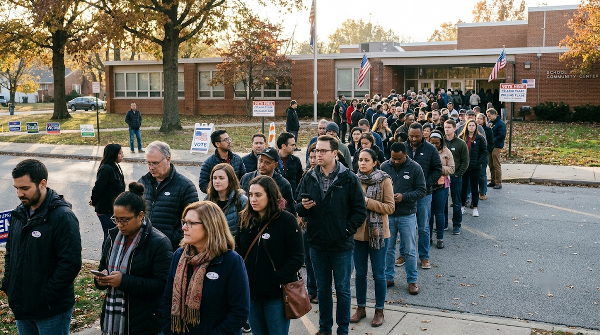
The November 2026 midterm elections delivered sweeping victories for the Democratic Party, representing a stark voter repudiation of President Donald Trump’s economic policies. Republicans sustained broad defeats across the House of Representatives, the Senate, and various gubernatorial races nationwide. According to comprehensive voter surveys, the dominant catalyst for this electoral shift was profound public frustration over surging living expenses and persistent economic instability. Rather than validating the administration’s claims of an economic renaissance, the electorate decisively utilized the ballot box to demand immediate legislative checks and balances on the executive branch.
AP News
- 2
High inflation and escalating consumer costs emerged as the defining elements of the midterm cycle, heavily penalizing the incumbent party. With the headline inflation rate reaching 3.7 percent, roughly two-thirds of participating voters directly blamed the president’s own domestic agenda for suffocating economic growth and exacerbating financial pressures. Polling indicated widespread consensus across diverse states that the administration’s chaotic implementation of foreign import tariffs throughout the preceding year inflicted significantly more harm than good on everyday consumers. Consequently, widespread concerns regarding basic affordability transformed from a mere campaign talking point into a severe political liability.
CTV News
- 3
This domestic financial strain was fundamentally compounded by severe energy price shocks linked directly to the administration’s assertive foreign policy decisions. Following the launch of the US-Israeli military conflict with Iran in February 2026, global markets experienced a severe disruption that drove domestic diesel fuel to record highs and pushed international crude benchmarks significantly above prewar levels. Although the president publicly defended the military engagement as a necessary intervention against nuclear proliferation, the resulting spike in gasoline prices alienated voters, rendering his attempts to deflect blame onto his Democratic predecessor highly ineffective.
CTV News
- 2
Paradoxically, the electoral backlash occurred despite several traditionally positive macroeconomic indicators, including a healthy 4.2 percent unemployment rate and a stock market bolstered by the artificial intelligence boom. However, roughly seven in ten voters perceived this economic landscape as fundamentally skewed to favor the wealthy, viewing rapid technological expansion with acute anxiety rather than optimism. This stark disconnect regarding wealth distribution precipitated massive demographic shifts. Key voting blocs that had previously demonstrated openness to conservative messaging—specifically younger voters, Hispanic demographics, and Black men—realigned substantially to support Democratic congressional candidates.
Vancouver Island – CTV News
- 3
The strategic ramifications of this newly divided government will fundamentally reshape the American policy landscape over the remainder of the presidential term. With Democratic majorities installed in Congress, the corporate sector must prepare for aggressive legislative oversight concerning pricing practices, technological infrastructure, and healthcare costs. Meanwhile, President Trump’s warning that he will readily deploy his veto powers guarantees a highly contentious environment marked by regulatory uncertainty and potential government funding disruptions. As bipartisan legislative progress stalls, the ongoing struggle over affordability and inflation will immediately dictate the political momentum heading toward the 2028 presidential contest.
Edelman
- 2